
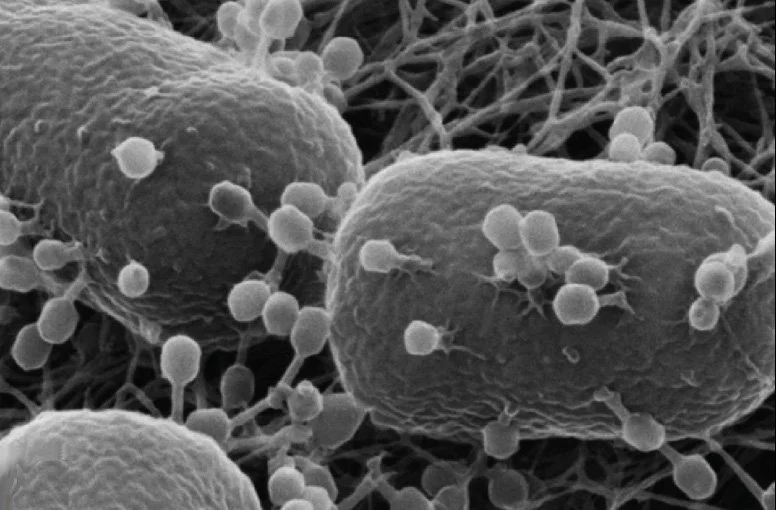
Bacteriophage T4 Infecting E. coli
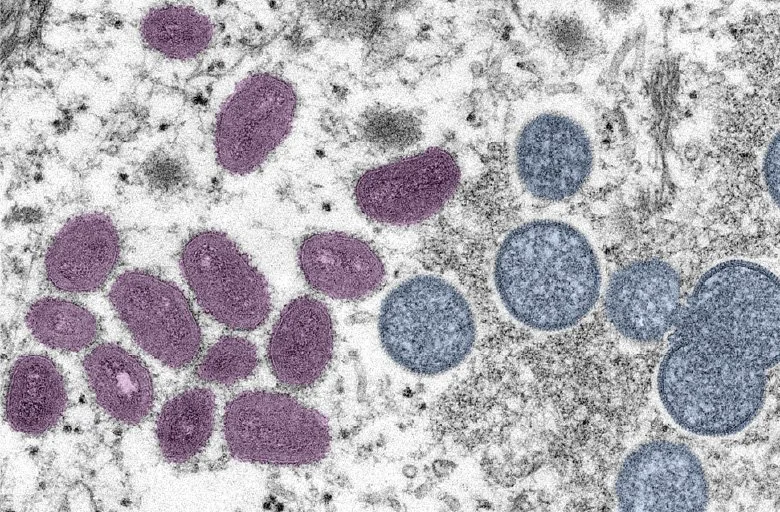
Monkeypox virions
Research
The evolutionary arms race between cells and viruses has generated tremendous diversity in host defense systems and viral immune evasion strategies. Until recently, prokaryotes and eukaryotes were thought to encode unrelated antiviral immune pathways that arose independently throughout evolution. However, recent studies have identified numerous anti-phage defense systems in bacteria that are homologous to eukaryotic innate immune pathways, revealing unexpected parallels in the fundamental mechanisms of antiviral immunity in all kingdoms of life.
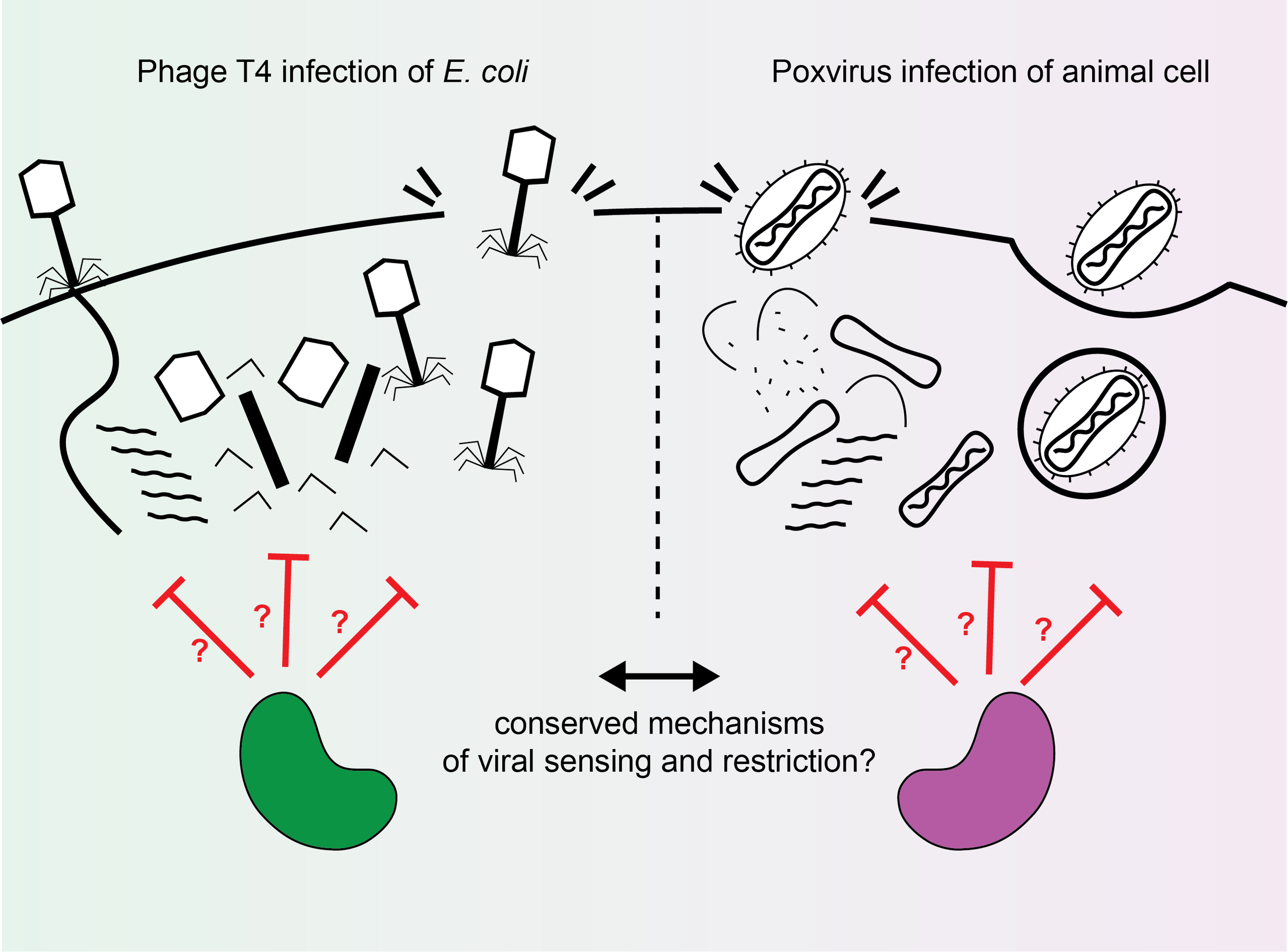
The overall goal of our research is to explain how conserved molecular rules govern host-virus interactions in all kingdoms of life, with a specific emphasis on the mechanisms host cells use to sense viral infection and the mechanisms viruses use to evade host immunity.
Define conserved mechanisms that allow cells to sense viral infection
Cell survival requires detection of viral infection and an immune effector response that limits viral spread.
In bacteria, cells are known to encode a diverse array anti-phage defense operons but for nearly all systems the mechanism of initial phage detection is poorly understood. Many of these systems are evolutionarily conserved in animals, highlighting our limited understanding of the fundamental rules that govern viral sensing in eukaryotic and prokaryotic cells. Our laboratory uses a biochemical approach to reconstitute antiviral pathways in vitro and identify viral factors that activate host immunity.

Discover conserved mechanisms of viral immune evasion
Immune evasion proteins are among the most important factors controlling viral host range and fitness. Viruses inhibit nearly every aspect of the host immune response through diverse mechanisms including protein degradation, signaling interference, and antigenic masking. However, even for well-characterized viruses such
as vaccinia virus and phage T4, nearly half of all genes have no known function, suggesting many strategies of
viral immune evasion remain to be discovered. Our laboratory uses a combination of genetic, biochemical, and structural approaches to identify new viral immune evasion proteins and to define their mechanisms of action.